From my original archive
Angola
Destination overview
About this destination
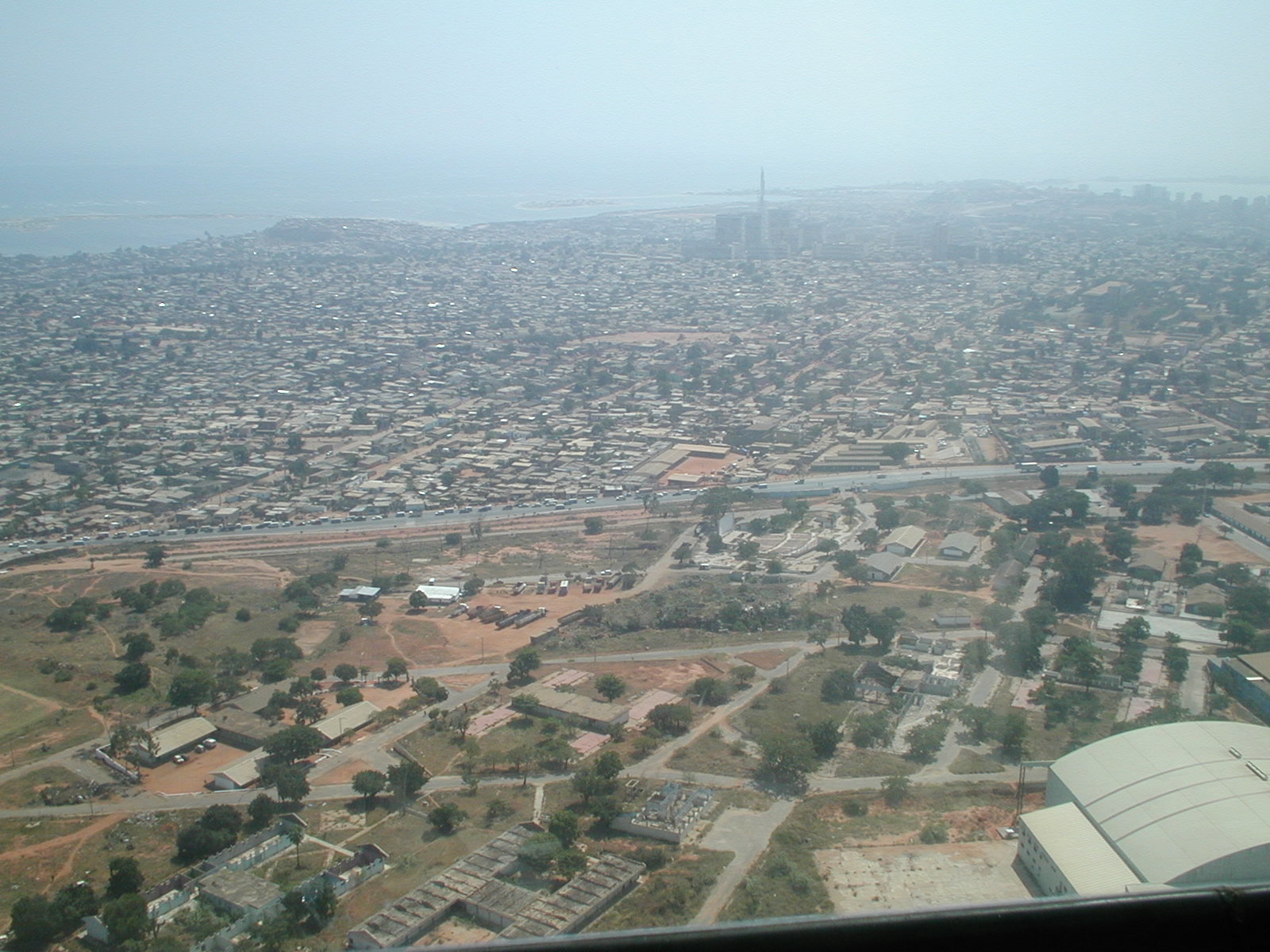
Angola lies on the Atlantic coast of southwestern Africa. Luanda, its capital, developed around a natural harbour. Portuguese is the official language, alongside several African languages.
The landscape changes from coastal plains to inland plateaus and tropical forest. In the south, dry country approaches the Namib Desert. The Kalandula Falls illustrate the scale of the country's rivers and escarpments.
Angola's cultural heritage includes varied musical traditions, with semba particularly associated with its urban history. Oil production and offshore installations have an important place in its industrial landscape.
My connection
My first oil and gas assignments included offshore electrical supervision with CAMOM–Petromar in 2000–2001. I supervised electrical generation and distribution, maintenance and local teams. I returned in 2017 as MEP superintendent on the FPSO Girassol, coordinating electrical, instrumentation, HVAC and piping activities.
Original archive notes and photographs
My original travel notes
Angola is a large country in southwestern Africa, with a diverse geography that includes a semidesert Atlantic coast, a sparsely populated rainforest interior, rugged highlands in the south, and a densely settled northern coast and river valleys. The capital and largest city is Luanda, a port city that blends Portuguese-style colonial landmarks with modern industrial complexes. Angola has an estimated population of 34.8 million people as of 2023, with a growth rate of 1.03%. The population is composed of nine main ethnic groups, with the Ovimbundu being the largest (37%), followed by the Ambundu (25%) and the Bakongo (11%). The official language is Portuguese, but many indigenous languages are also spoken. About 41% of the population is Roman Catholic, 38% is Protestant, and 12% follows indigenous beliefs. Angola is rich in natural resources, especially oil, diamonds, metals and minerals. It is one of the largest oil producers in sub-Saharan Africa and has a fast-growing economy. However, it also faces many challenges, such as poverty, inequality, corruption, human rights violations, land mines, malnutrition and poor health care. The country suffered a long civil war from 1975 to 2002 that left much of the infrastructure and social services in ruins. Since then, it has made some progress in rebuilding and developing, but still ranks low on the Human Development Index (0.581 in 2019).
Personal memories
I worked in Angola twice: on Block 3 for Elf in 2000–2001, and for Total in 2017. The first visit was my introduction to the oil and gas industry. Working with the French crew was sometimes difficult—as the joke goes, the French know everything! Nevertheless, it was a valuable opportunity to learn how the industry operated.
The platforms were already very old, so I learned to work with obsolete equipment and technology. The Angolan colleagues were very kind. Once we had overcome the language barrier, we were able to meet our maintenance objectives on IPSF1, IMPALA, PALP1 and PALP2.