From my original archive
Belgium
Destination overview
About this destination
Belgium lies in Western Europe between France, the Netherlands, Germany and Luxembourg. Brussels is the capital and an important centre for European institutions. Dutch, French and German are its official languages.
The North Sea coast gives way to lowland cities and the wooded hills of the Ardennes. Bruges preserves canals and a medieval urban landscape. Antwerp has a long history as a trading port.
Brussels' Grand Place illustrates the country's rich architectural heritage. Food traditions include regional beers, chocolate and distinctive local dishes, while engineering and industry also form a significant part of Belgium's identity.
My connection
In 2023, I worked in Brussels as site manager for a Schneider Electric data-centre project. I coordinated the teams and preparation of commissioning for Premset electrical equipment, Galaxy 1250 kVA UPS systems and Uniflair air-cooled chillers, with attention to technical integrity, planning and safety.
Original archive notes and photographs
My original travel notes
Let's start with Belgium, a small but densely populated country in Western Europe. Belgium has a diverse landscape, ranging from the flat coastal plains in the north and west, to the rolling hills and valleys in the center, to the rugged Ardennes forest and mountains in the south and east. Belgium is divided into three regions: Flanders, Wallonia, and Brussels-Capital. Flanders is the northern, Dutch-speaking part of the country, where most of the population and economic activity are concentrated. Wallonia is the southern, French-speaking part of the country, where the natural resources and industrial heritage are located. Brussels-Capital is the bilingual but majority French-speaking region that hosts the capital city and the main European institutions.
Belgium has a multicultural population of about 11.6 million people, with various origins and backgrounds. According to the latest statistics, about 58% of the population are Flemish, 31% are Walloon, and 11% are mixed or other. The foreign population of Belgium accounts for about 12% of the total population, with the largest groups coming from France, Italy, Morocco, Romania, and Poland. Belgium is also home to a small German-speaking community in the east of the country. The official languages of Belgium are Dutch, French, and German, but many people also speak English as a second or third language.
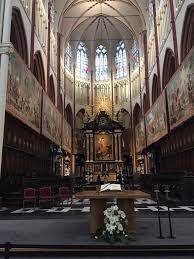
Belgium has a high quality of life, with a well-developed social welfare system, a high standard of living, a high level of education, and a rich cultural heritage. Belgium is known for its cuisine, especially its chocolate, waffles, fries, and beer. It is also famous for its art and architecture, especially its medieval cities and Gothic cathedrals. Belgium ranks among the top countries in the world in terms of human development index (HDI), happiness index (HPI), democracy index (DI), and press freedom index (PFI).
Personal memories
I have visited Belgium several times. I generally felt welcome in the French-speaking areas, but less welcome in the Flemish-speaking areas, even when people spoke a little French. I found that attitude rather foolish.
Nevertheless, Belgium is a good place to enjoy beer. In Bruges, there is a beer pipeline running for about three kilometres beneath the city. I particularly enjoy drinking Kwak from its unusual glass, which can also provide an opportunity for a joke.