From my original archive
Comoros
Destination overview
About this destination
The Union of the Comoros is an island country in the Indian Ocean, between Madagascar and the African mainland. Its capital, Moroni, lies on Grande Comore. The union comprises Grande Comore, Mohéli and Anjouan; Mayotte is administered separately by France.
Volcanic landscapes are a defining feature of the islands. Mount Karthala dominates Grande Comore. Comorian, Arabic and French are official languages.
The culture reflects African, Arab and Indian Ocean connections. Coastal villages, fishing traditions and the cultivation of fragrant crops such as ylang-ylang contribute to the islands' distinctive character.
My connection
I went to the Comoros with the French Navy aboard the support vessel Tianee, serving as an electrician. The work included refurbishment of first-class mooring buoys. This was a naval assignment involving practical maintenance work, rather than tourism. My electrical role formed part of the vessel’s wider support activity, bringing technical work into a maritime setting in the Indian Ocean. The Comoros remain associated in my memory with the ship, the maintenance task and the teamwork of service at sea.
Original archive notes and photographs
My original travel notes
Comoros Island is a small African nation located in the Indian Ocean, between Madagascar and Mozambique. It consists of four main islands: Grande Comore, Anjouan, Moheli and Mayotte. The latter, however, remains under French administration and is not part of the Comorian Union. Comoros Island has a rich and diverse history, culture and natural beauty, but also faces many challenges such as political instability, poverty and environmental degradation.
## Landscape
Comoros Island has a volcanic origin and a rugged terrain, with mountains, plateaus and valleys. The highest peak is Mount Karthala on Grande Comore, which is an active volcano that last erupted in 2007. The islands are surrounded by coral reefs and lagoons, which provide habitats for marine life and opportunities for tourism. The climate is tropical maritime, with warm and humid weather throughout the year. The islands receive abundant rainfall, especially during the wet season from November to April.
## Demographics
Comoros Island has a population of about 876,000 people (2022 estimate), making it one of the most densely populated countries in Africa. The majority of the population lives on Grande Comore and Anjouan, while Moheli is the least populated island. The population is composed of various ethnic groups, mainly of African-Arab origins, influenced by centuries of trade and migration from the Arabian Peninsula, Southeast Asia and mainland Africa. The official languages are Arabic, French and Comorian, which is a Swahili-based language with Arabic and Malagasy influences. The dominant religion is Islam, practiced by more than 98% of the population. Most Comorians follow Sunni Islam of the Shafi'i school, but there are also some Shia and Sufi minorities. The literacy rate is about 89%, but there are significant disparities between urban and rural areas, and between men and women.
## Standard of living
Comoros Island is one of the poorest countries in the world, with a GDP per capita of about $1,500 (2020 estimate). The economy is largely based on agriculture, fishing and tourism, but suffers from low productivity, lack of infrastructure, dependence on imports and external aid, and vulnerability to natural disasters and climate change. The main crops are vanilla, cloves, ylang-ylang, coconut, banana and cassava. The main exports are vanilla, cloves, ylang-ylang oil and fish. The main trading partners are France, India, China and South Africa. The unemployment rate is estimated at 20%, but informal sector activities are widespread. About 42% of the population lives below the poverty line (2014 estimate), and many people lack access to basic services such as health care, education, water and sanitation. The life expectancy at birth is about 67 years (2022 estimate), which is below the regional average. The main health problems are malaria, tuberculosis, HIV/AIDS and malnutrition. The fertility rate is about 2.8 children per woman (2022 estimate), which is above the replacement level but has declined significantly in recent decades due to family planning programs.
## Conclusion
Comoros Island is a fascinating country with a unique culture and natural beauty, but also faces many challenges such as political instability, poverty and environmental degradation. The country needs more investment in human development, infrastructure, governance and environmental protection to achieve sustainable development and improve the living conditions of its people.
Personal memories
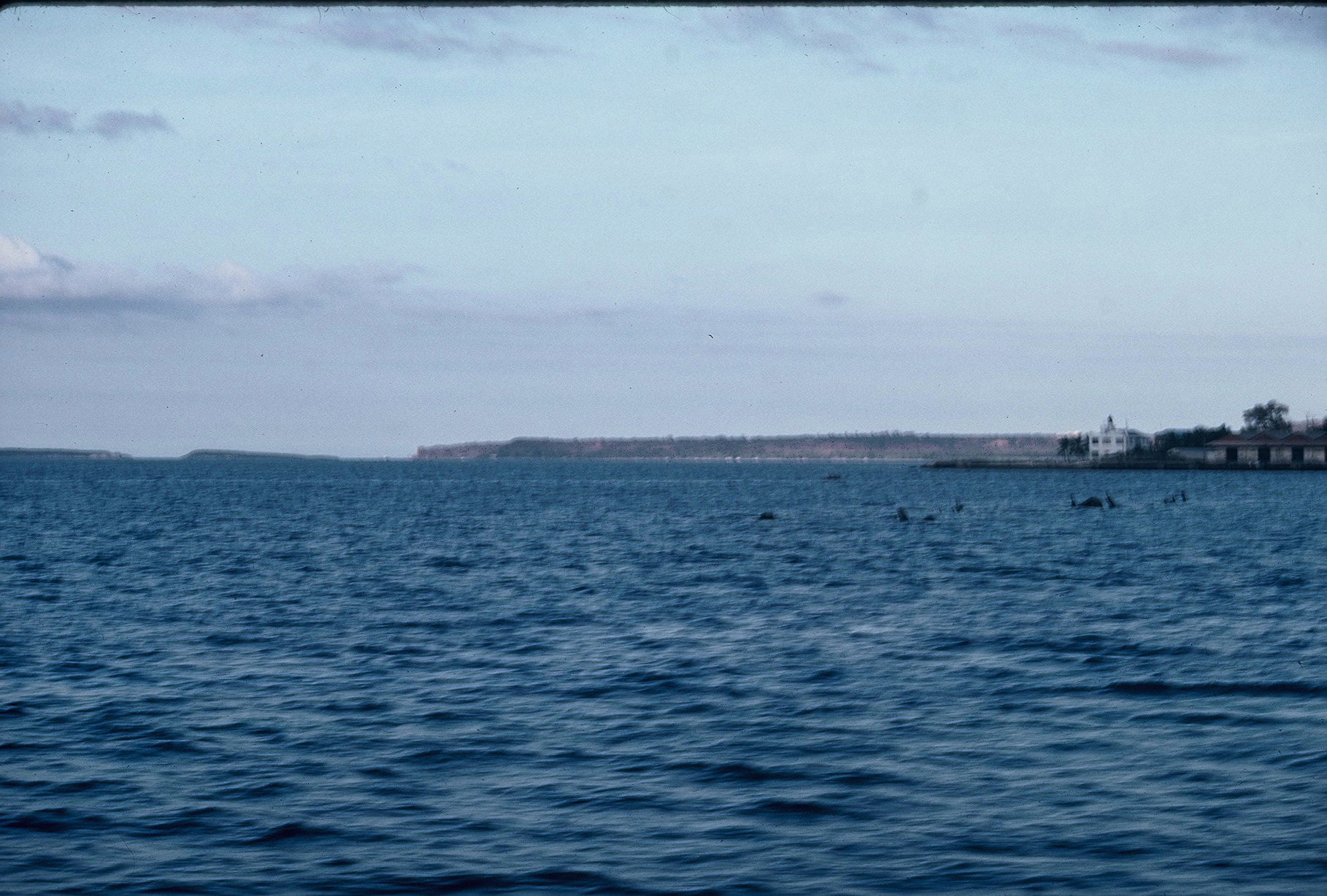
In 1987, during our assignment aboard the French Navy vessel Tianee, we visited the Comoros archipelago and stopped in Mamoudzou. We spent several weeks repairing and maintaining mooring buoys.
We met a group of South Africans who enjoyed sailing to the area and having a good time. I particularly remember the yacht Shumbo and a man named Moses. After a big party in Durban, he had fallen asleep aboard. When he woke up, the yacht was already a day out at sea, so he decided to stay with his friends for the voyage.
They arrived in Mamoudzou with 160 packs of beer, five magnums of Johnnie Walker and some Captain Morgan rum, but no refrigerator aboard their yacht. We made a deal: we supplied Coca-Cola and ice, and joined them for the parties. We had an unforgettable week with the men and women aboard.