From my original archive
Estonia
Destination overview
About this destination
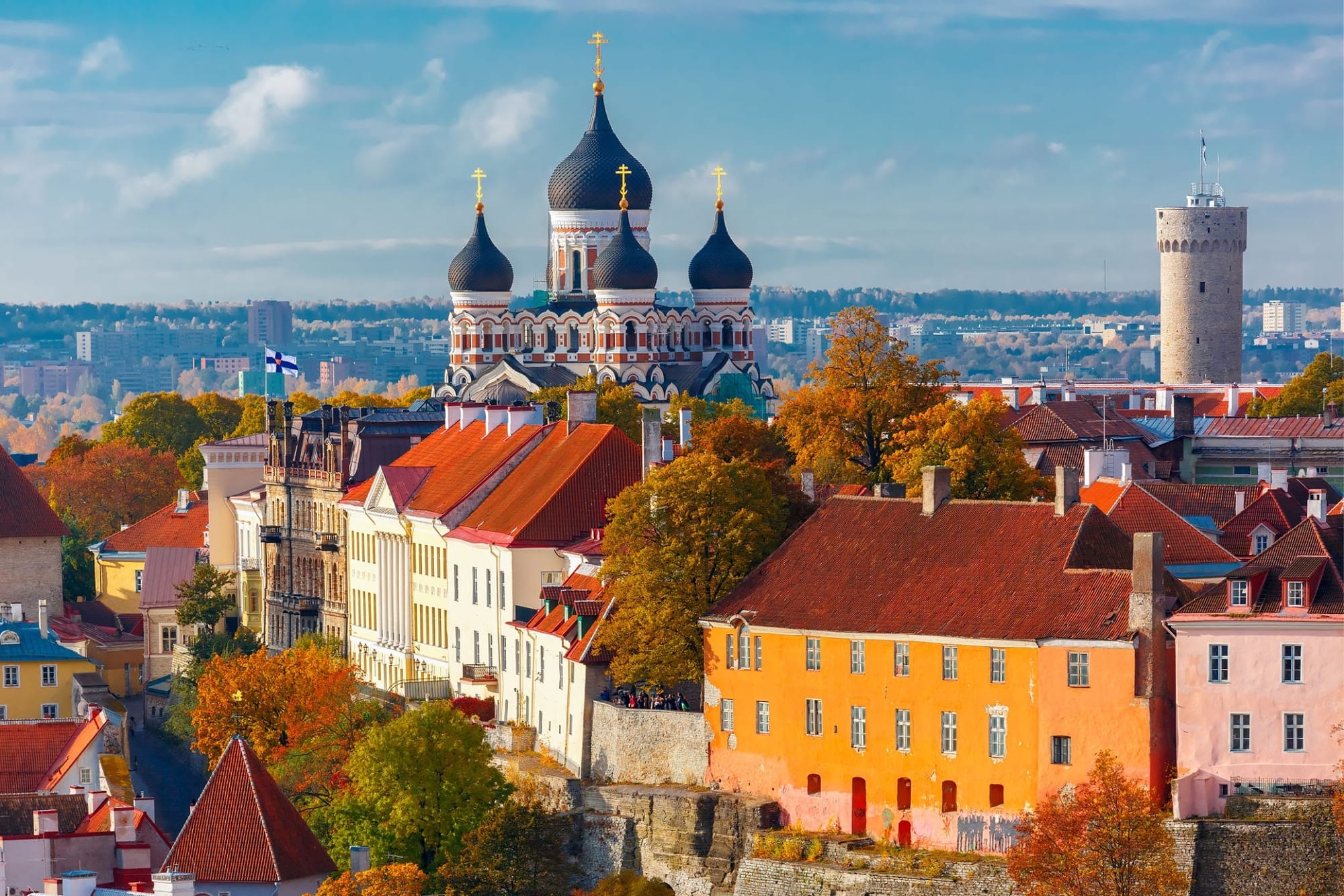
Estonia lies in northeastern Europe beside the Baltic Sea. Tallinn is its capital, with a well-preserved medieval old town. The country includes mainland territory and many islands, notably Saaremaa and Hiiumaa.
Forests, wetlands and a long coastline characterise its landscape. Estonian is the national language and is related to Finnish. Maritime commerce connected Tallinn with the wider Hanseatic trading world.
Traditional song festivals remain an important expression of cultural identity. Wooden houses, coastal villages and modern digital infrastructure provide different perspectives on a country that combines Baltic history with a strongly contemporary outlook.
My connection
Tourist visit.
Original archive notes and photographs
My original travel notes
Estonia has a diverse landscape, with flat plains, rolling hills, forests, lakes, islands, and a long coastline. The climate is temperate, with four distinct seasons. The average temperature in January is -5°C and in July is 17°C. Estonia has a high level of environmental protection and ranks among the top countries in the world for air quality, forest cover, and organic farming. Estonia's demography is characterized by low fertility, high life expectancy, and an ageing population. The birth rate is 9.97 per 1,000 population and the death rate is 13.96 per 1,000 population (2021). The life expectancy at birth is 78.8 years for both sexes (2020), with 74.4 years for males and 82.8 years for females. The total fertility rate is 1.61 children per woman (2021). The population growth rate is 0.19% (2020). The dependency ratio (the ratio of children and elderly to working-age population) is 409 per 1,000 (2020). Estonia's population is mainly composed of ethnic Estonians (69.1%), followed by Russians (23.7%) and other minorities (7.2%). The official language is Estonian, which belongs to the Finno-Ugric language family and is closely related to Finnish. Russian is widely spoken as a second language, especially by the Russian-speaking minority. English is also widely used as a foreign language, especially among younger generations and in business and tourism sectors. Estonia's economy is based on services (74% of GDP), industry (25% of GDP), and agriculture (1% of GDP). Estonia has a high level of innovation and digitalization, ranking among the top countries in the world for internet access, e-government services, and start-up activity. Estonia is also known for its success in education, ranking among the top performers in international assessments such as PISA and TIMSS. Estonia's main trading partners are Finland, Sweden, Germany, Latvia, and Russia.
Personal memories
For my fiftieth birthday, I invited my Russian family on a fifteen-day cruise through the North Sea and the Baltic Sea. The itinerary included Copenhagen, Riga, Tallinn, Saint Petersburg, Stockholm, Oslo and Bergen.
The trouble began at Paris Charles de Gaulle Airport, which I consider the worst airport I have used. My luggage had been left behind five times on July journeys. On this occasion, I was sitting beside the aircraft window and could see my bags still on the tarmac as the baggage compartment was being closed. I pointed this out to an older Air France flight attendant, who dismissed my concern and assured me that they would be loaded.
We arrived in Copenhagen without our luggage for a fifteen-day cruise. For five days, as we made short stops around the Baltic, our bags followed us from airport to airport. We finally received them in Tallinn.
Costa helped by providing disposable underwear and T-shirts. Their staff said that they were used to this problem with passengers arriving from Charles de Gaulle. After that experience, my advice is to avoid the airport and Air France if you can.