From my original archive
Finland
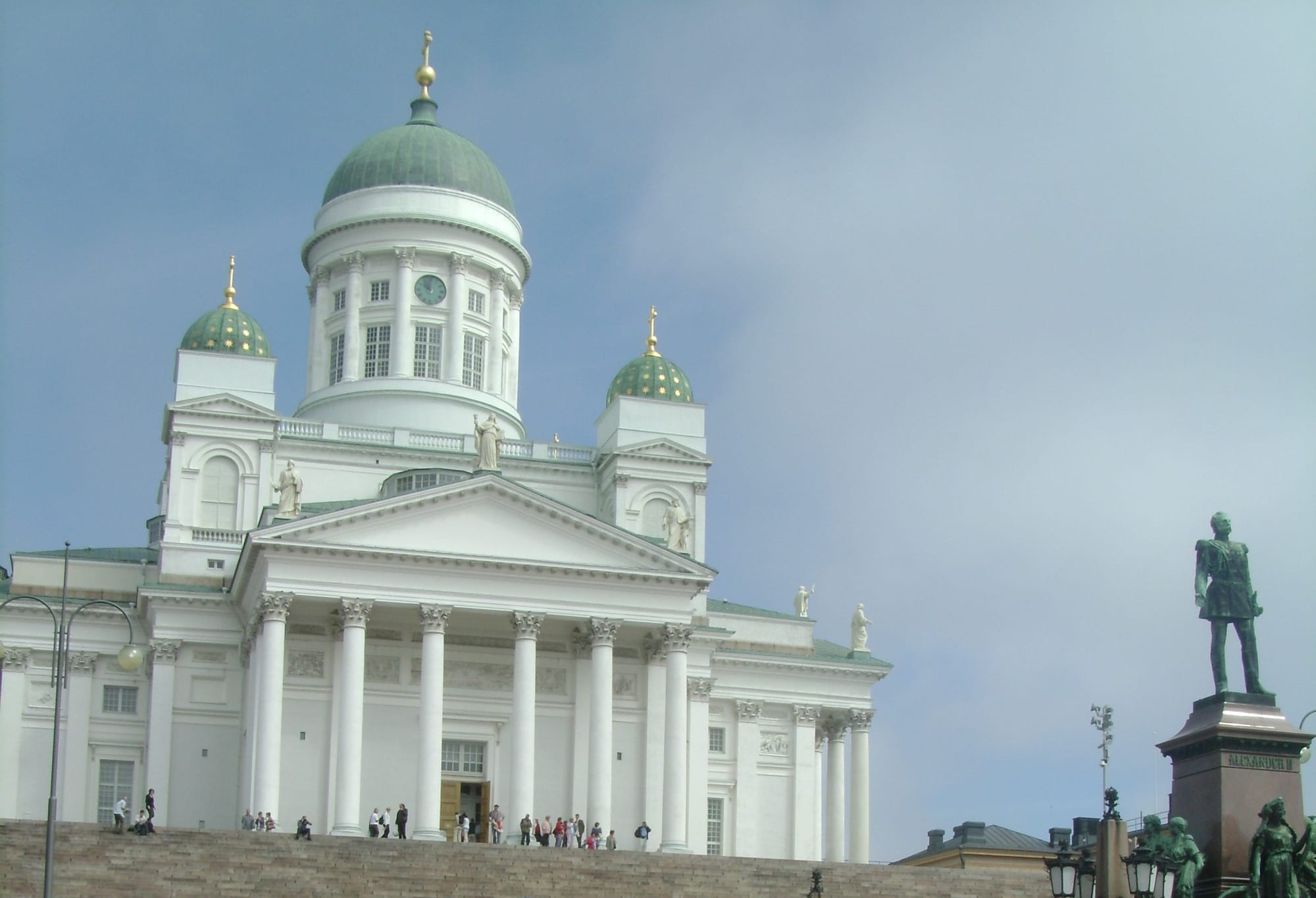
Destination overview
About this destination
Finland lies in northern Europe between Sweden and Russia. Helsinki, its capital, faces the Gulf of Finland. Lakes and forests are defining features of the country.
Finnish and Swedish are official languages. In the far north, Lapland connects Finnish geography with the wider Arctic region and Sámi heritage. Seasonal changes bring long summer daylight and short winter days.
Sauna culture has a recognised place in everyday life. Design, architecture and engineering accompany this close relationship with nature, while the Baltic coastline and inland lake districts offer very different landscapes.
My connection
Tourist visit.
Original archive notes and photographs
My original travel notes
Finland is a Nordic country located in Northern Europe. It has a population of over 5.5 million people and an average population density of 19 inhabitants per square kilometre. Finland is known for its high quality of life, universal healthcare, and successful education system. In this blog post, we will explore some of the features of Finland's landscape, demographics, and quality of life.
Landscape
Finland is often called the Land of the Thousand Lakes, because it has more than 187,000 lakes within its borders. The largest lake is Lake Saimaa, which covers an area of 4,400 square kilometres. Finland also has a long coastline along the Baltic Sea, the Gulf of Bothnia, and the Gulf of Finland. The coastline is dotted with thousands of islands, especially in the archipelago region in the southwest.
Finland's landscape is mostly flat or gently rolling, with some hills and low mountains in the north and east. The highest point is Halti, which reaches 1,324 metres above sea level. About 75% of Finland's land area is covered by forests, mainly pine, spruce, and birch trees. Finland also has many national parks and nature reserves that protect its diverse flora and fauna.
Demographics
Finland has a very homogeneous population, with most people being ethnic Finns. The largest minority groups are Swedes (5.3%), Russians (1.3%), Estonians (0.8%), and Somalis (0.4%). The official languages are Finnish and Swedish, but there are also some recognized regional languages such as Sami, Romani, and Finnish Sign Language. The Sami are the indigenous people of northern Finland, who have their own culture and traditions. There are about 4,500 Sami left in Finland who are officially recognized as a minority.
Finland has a low birth rate and a high life expectancy, which means that its population is ageing rapidly. The median age is 43.6 years, and the proportion of people over 65 years is 22.4%. Finland also has a low immigration rate compared to other European countries. In 2020, there were about 400,000 foreign-born residents in Finland, accounting for 7.2% of the total population.
Quality of life
Finland has been ranked as the happiest country in the world for four consecutive years by the World Happiness Report. This report measures six key factors: GDP per capita, social support, life expectancy, freedom to make life choices, generosity, and corruption levels. Finland scores well in all of these categories, although it does particularly well with the generosity factor.
Some of the reasons why Finns are happy include their high level of trust in each other and in their institutions, their strong sense of community and social equality, their respect for nature and the environment, and their appreciation for culture and education. Finns also enjoy a high standard of living, with free or subsidized healthcare, education, childcare, and elderly care. They also have a flexible work culture that values work-life balance and employee well-being.
Conclusion
Finland is a country that offers many benefits to its residents and visitors. It has a beautiful and diverse landscape that invites exploration and recreation. It has a stable and homogeneous population that values social cohesion and cultural diversity. And it has a high quality of life that fosters happiness and well-being. Finland is a country that deserves to be celebrated and admired.
Personal memories
I visited Helsinki twice with my family, in 2002 and 2008, while driving from Volgograd in Russia to France. We stopped in Moscow and Saint Petersburg along the way, then took a ferry from Helsinki to Rostock in Germany. It was a long journey, but an interesting one.
I did not find the people particularly friendly, either in Finland or at the border. Perhaps the Russian registration plates on my car played a part. Nevertheless, visiting Helsinki was interesting.