From my original archive
Mauritius
Destination overview
About this destination
Mauritius is an island country in the Indian Ocean, east of Madagascar. Port Louis is its capital and main port. The main island has volcanic origins, with a central plateau and coastal plains.
Coral reefs and lagoons surround much of the coastline. Its cultural heritage reflects African, European, Indian and Chinese connections. Mauritian Creole, French and English have important roles in daily life.
Sugar cultivation forms a significant chapter in the island's history. Temples, churches, markets and local food reveal this cultural diversity, while smaller islands such as Rodrigues add further regional character.
My connection
Tourist visit.
Original archive notes and photographs
My original travel notes
Mauritius is an island nation in the Indian Ocean, located about 2,000 km off the southeast coast of Africa. It has a population of about 1.3 million people. It consists of the main island of Mauritius and several smaller islands, such as Rodrigues, Agalega, and St Brandon. Mauritius was uninhabited until the 17th century when it was colonized by the Dutch, followed by the French and the British. Mauritius gained its independence from the UK in 1968 and became a republic in 1992. Mauritius has a tropical climate, with warm weather throughout the year. The average temperature ranges from 22°C in winter to 28°C in summer. Mauritius has a diverse landscape, with volcanic mountains, plateaus, plains, coral reefs, lagoons, and beaches. Mauritius is known for its natural beauty and biodiversity, hosting many endemic species of plants and animals. Mauritius also has a rich cultural heritage, influenced by its multiethnic and multireligious population. Mauritius's demography is characterized by low fertility, low mortality, and a stable population size. The birth rate is 12 per 1,000 population and the death rate is 8 per 1,000 population (2020). The life expectancy at birth is 75 years for both sexes (2020), with 72 years for males and 78 years for females. The total fertility rate is 1.4 children per woman (2020). The population growth rate is 0% (2020). The dependency ratio (the ratio of children and elderly to working-age population) is 379 per 1,000 (2020). Mauritius's population is composed of various ethnic groups that trace their origins to India (68%), Africa (27%), China (3%), and Europe (2%). The official language is English but most people speak French or Creole as their first language. Other languages spoken include Hindi
Personal memories
In 1987, aboard the French Navy vessel Tianee, we travelled through the Indian Ocean to repair and install mooring buoys. Our itinerary included Djibouti, the Comoros islands, Europa, Juan de Nova, Seychelles and Madagascar.
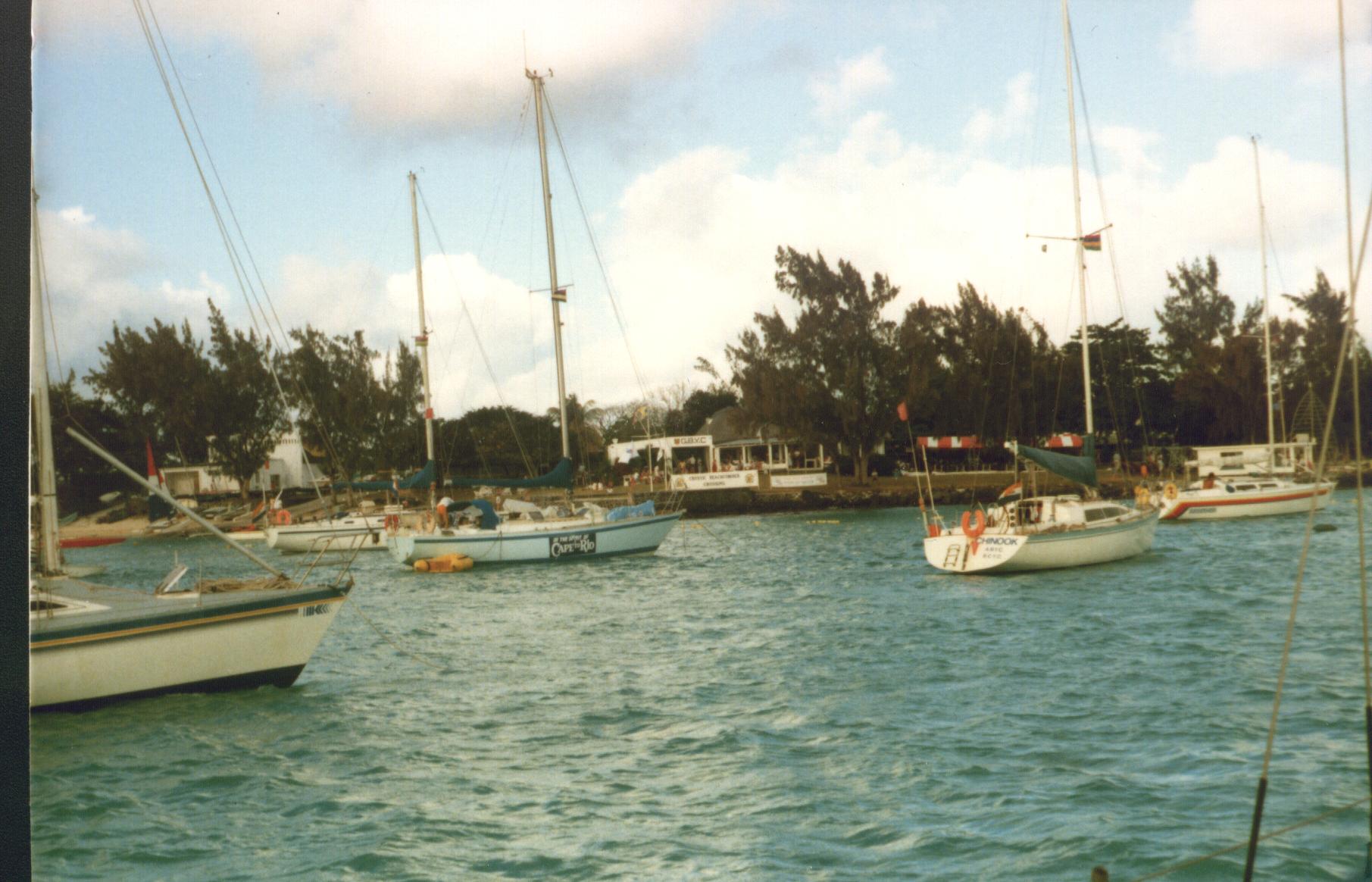
It was the best assignment of my life. I made good friends, and some of us still share memories of that time. In Mauritius, I spent time with South Africans whom I had met in the Comoros and who had followed our route. We sailed around the island and visited the bars together.
I visited the model-boat workshop Historic Marine and bought a model of La Toulonnaise. The craftspeople were skilled and friendly, like the other Mauritians I met. I also enjoyed the colourful fruit market and the remarkable site with earth in seven colours.
 |  |  |